Withdraw Staked ETH from Lido Finance to Your Wallet
Lido does not give you a direct “unstake now” switch. That is the first constraint. If you hold stETH, you are holding a liquid staking token that represents ETH staked through Lido’s validator set.
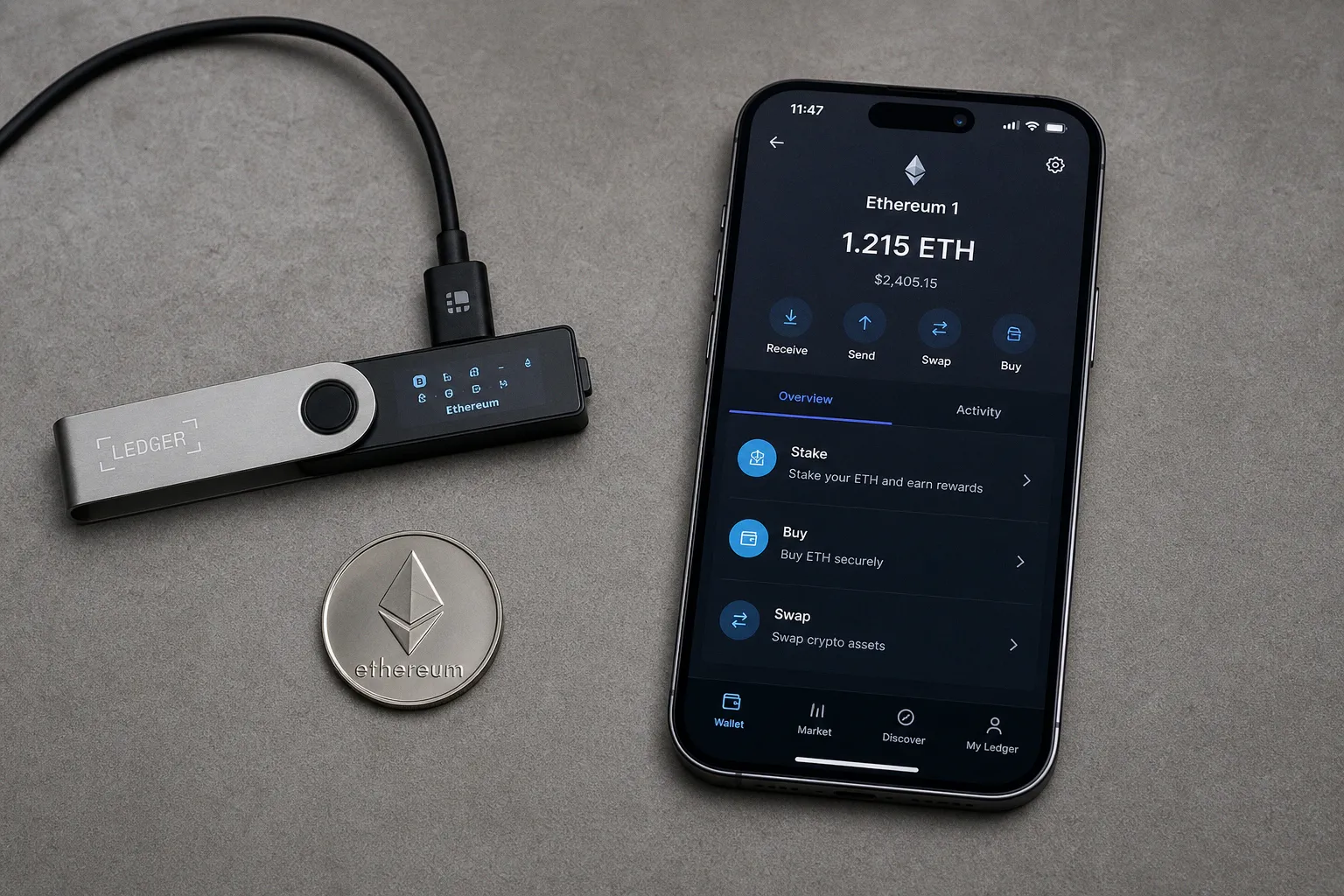
The protocol path is slower but cleaner. It burns stETH and returns ETH after finalization. The market path is faster but exposes you to slippage, pool depth, and execution risk. The correct choice depends on size, urgency, gas cost, and tolerance for price deviation.
If the operational question is how to check withdraw staked ETH from Lido Finance to your wallet, the answer is not one transaction. It is a two-stage workflow: request first, claim later.
For related context, see Stake ETH in Rocket Pool to earn rETH staking rewards.
The Mechanics of the Lido Withdrawal Request Portal
Lido V2 introduced withdrawals in May 2023. Before that, stETH liquidity depended on secondary markets. After V2, holders gained a native redemption path from stETH to ETH.
The withdrawal portal does three things:
1. It accepts a withdrawal request from a wallet holding stETH or wstETH.
2. It queues that request for protocol processing.
3. It allows the wallet to claim ETH after finalization.
That sounds simple. It is not instantaneous. The delay exists because ETH is not sitting in one hot wallet waiting for redemptions. It is tied to Ethereum validator mechanics, Lido’s withdrawal buffer, and the validator exit process.
There is no Lido withdrawal fee. That point matters. The protocol does not charge an explicit redemption fee for using the withdrawal flow. The user still pays Ethereum gas. Gas is not optional. Each transaction has execution cost, and that cost can make small withdrawals irrational.
The minimum withdrawal amount is not the binding constraint for most users. Gas is. A $15 gas bill on a small stETH balance is bad engineering. It is not a protocol problem. It is transaction economics.
stETH and wstETH are not identical at the interface
Lido users may hold either stETH or wstETH.
stETH is rebasing. Its balance changes as staking rewards accrue. wstETH is wrapped stETH. Its token balance stays fixed while the exchange rate to stETH changes.
For withdrawals, the portal may require the asset type to be handled correctly. If the user holds wstETH, the workflow can involve unwrapping or submitting through the supported Lido interface path. The practical result is the same: the withdrawal request represents a claim on ETH after the protocol finalizes it.
The failure mode is common: a user looks at wstETH in a wallet and assumes it can be “unstaked” with one click in a generic wallet UI. That is incorrect. Wallet interfaces display balances. They do not necessarily implement protocol-specific withdrawal state machines.
stETH is liquid. The redemption path is not instant. Confusing those two facts is the basic user error.
Navigating the Two-Stage Redemption: Request and Claim
The Lido withdrawal process has two visible phases: request and claim.
The request transaction starts the exit path. The claim transaction finishes it.
This separation is not cosmetic. It is state management. The first transaction records intent and locks the redemption position. The second transaction transfers ETH after the protocol has finalized the request.
A clean procedure looks like this:
1. Connect the wallet that holds stETH or wstETH.
Use the same wallet that controls the token balance. Do not connect a different address and expect it to see claimable funds. The claim belongs to the requesting address.
2. Open the Lido withdrawal interface.
Use the official Lido UI or a verified app route. This is not where improvisation belongs. Phishing pages commonly imitate staking and withdrawal flows because users are already expecting wallet prompts.
3. Select the token and amount.
If the wallet holds stETH, the request can be made against stETH. If it holds wstETH, the interface may guide the wrapping state. Read the transaction simulation. Verify which asset is being approved or burned.
4. Submit the withdrawal request.
This transaction costs gas. The protocol withdrawal fee is 0 ETH, but Ethereum execution still charges gas.
5. Wait for finalization.
The request enters a queue. Processing time varies. Under normal conditions, users often see a range around 1–5 days, but the exact current wait time is dynamic.
6. Return and claim ETH.
Once the request is finalized, a second transaction claims ETH into the wallet.
The critical operational detail: do not treat the first transaction as completion. It is only the request. The wallet will not receive ETH until the claim step succeeds.
What to verify before signing
A withdrawal flow exposes several attack vectors. Most are not exotic. They are interface-level and approval-level failures.
Check these before signing:
- Domain integrity.
A fake Lido page can request token approvals or malicious signatures. Verify the domain manually. Do not enter from sponsored search results.
- Token being spent.
The transaction should concern stETH or wstETH, not unrelated wallet assets. If a prompt asks for broad approval across unexpected contracts, stop.
- Recipient address.
The ETH should be claimable by the same wallet that initiated the request unless the interface explicitly supports a different receiver and you selected it knowingly.
- Transaction type.
A withdrawal request is not a swap. If the UI routes through a DEX without clear user intent, that is a different execution path.
- Gas estimate.
Gas spikes can convert a technically valid withdrawal into bad economics. Execution can wait unless timing is critical.
This is the same discipline used in any preventive control system: identify the failure mode before the failure occurs. The principle is not limited to finance; even resources focused on preventive medicine and healthy living are built around the same baseline logic. Detect risk early. Reduce damage later.
Understanding the Ethereum Validator Exit Queue and Wait Times
Lido withdrawals are constrained by Ethereum’s consensus-layer mechanics. The validator set cannot all exit at once. Ethereum uses churn limits to control validator activation and exit rates. This protects network stability but creates a queue when many validators or withdrawals are moving.
For a Lido user, this means the wait time is variable.
A typical range may be 1–5 days under ordinary conditions. That is not a service-level guarantee. It depends on:
- the size of Lido’s withdrawal buffer;
- the amount of ETH currently requested for withdrawal;
- Ethereum validator exit demand;
- validator churn limits;
- network conditions around the time of claim;
- whether the request can be covered from available liquidity or requires validator exits.
There is no honest fixed timestamp without reading live protocol state. Any interface that promises a guaranteed instant redemption through Lido’s native withdrawal queue is either abstracting through another liquidity source or misrepresenting the process.
Why the queue exists
Validators hold 32 ETH each at the consensus layer. A liquid staking protocol like Lido aggregates deposits and delegates staking operations across node operators. When withdrawals exceed readily available ETH, validators may need to exit or partial withdrawals must supply the buffer.
Ethereum limits validator churn. This is deliberate. Without limits, a large exit wave could damage consensus stability. With limits, users receive predictable protocol safety but not instant liquidity.
This trade-off is core to proof-of-stake design.
The useful model is not “bank withdrawal.” It is “protocol redemption through a bounded exit system.” Different assumptions. Different latency.
The queue is not a bug. It is a safety valve. The cost is time.
Comparing Protocol Withdrawals Against DEX Liquidity Swaps
Users often ask whether they should withdraw through Lido or swap stETH for ETH on a decentralized exchange. The answer depends on the failure mode you are trying to avoid.
A protocol withdrawal gives you canonical redemption. It is usually the cleanest path when time is acceptable.
A DEX swap gives you speed. It also prices urgency. If pool liquidity is thin or the stETH/ETH rate is off peg, the user pays through slippage.
| Parameter | Lido withdrawal portal | DEX swap for ETH |
|---|---|---|
| Speed | Variable; often 1–5 days, not guaranteed | Immediate if transaction executes |
| Fee structure | No Lido withdrawal fee; gas applies | Gas plus pool fee and slippage |
| Price risk | Redeems through protocol mechanics | Exposed to stETH/ETH market rate |
| Execution complexity | Two-stage: request, then claim | One swap transaction |
| Main failure mode | Waiting on queue/finalization | Bad price execution or low liquidity |
| Best use case | Larger withdrawals where price precision matters | Urgent liquidity needs |
The DEX route is not “unstaking.” It is selling stETH. That distinction matters for accounting, execution analysis, and risk review.
If a user swaps stETH to ETH on Curve or Uniswap, Lido does not redeem anything for that user. Another market participant buys the stETH. The user exits exposure through liquidity, not through the protocol withdrawal queue.
When the DEX route is rational
A DEX swap can be rational when:
1. The amount is small enough that slippage is negligible.
If the trade impact is low and gas is acceptable, the user may prefer immediate ETH.
2. The user needs ETH now.
Collateral calls, liquidation defense, bridge timing, and operational treasury needs can justify paying slippage.
3. The stETH/ETH pool is deep at the time of execution.
Liquidity varies. A good route at 09:00 UTC can be worse at 15:00 UTC.
4. The user can simulate the trade.
Do not rely on quoted output alone. Confirm minimum received. Use conservative slippage settings.
5. The user understands sandwich risk.
Large visible swaps can be attacked in public mempools. Routing and execution tools matter.
A DEX swap is not inferior. It is a different instrument. It trades price certainty for time certainty.
Managing Gas Costs and Network Congestion During Redemption
The Lido protocol does not charge a withdrawal fee. Ethereum gas still applies twice in the normal portal path: once for the request and once for the claim.
That creates a simple cost model:
- Request transaction gas.
- Claim transaction gas.
- Possible approval or wrap/unwrap gas if the asset state requires it.
- Opportunity cost during the queue period.
- Potential tax or accounting implications depending on jurisdiction and classification.
The exact gas cost is not fixed. It depends on Ethereum network congestion. Do not anchor on old screenshots or social posts. Base fee moves.
For larger withdrawals, the gas component is usually small relative to principal. For small withdrawals, it can dominate the decision.
Practical gas control
A user does not need perfect timing. The user needs non-stupid timing.
The following rules are sufficient for most non-institutional withdrawal flows:
1. Avoid peak congestion unless urgency overrides cost.
NFT mints, meme-token launches, and volatile market events can push gas higher. Waiting several hours can reduce execution cost materially.
2. Do not over-fragment withdrawals.
Multiple small requests create repeated claim overhead. If operationally acceptable, consolidate.
3. Do not chase a low gas estimate into a failed transaction.
Failed execution still burns gas. Underpricing can be worse than waiting.
4. Record the request transaction hash.
The claim step depends on knowing the request status. Wallet history is not a control system. Keep records.
5. Check finalization before attempting claim.
A premature claim attempt can fail or simply be unavailable. Use the interface state.
6. Do not sign “helpful” recovery transactions from unknown sites.
A pending withdrawal is not lost because it is waiting. Attackers exploit impatience.
This is where most user losses occur. Not in the Lido queue. In the side-channel behavior around it.
A Minimal Risk Matrix for Withdrawing stETH
The following matrix is not theoretical. It maps the common user actions to the risk they introduce.
| Action | Primary risk | Severity | Control |
|---|---|---|---|
| Using Lido withdrawal portal | Queue delay | Medium | Confirm request and claim status |
| Swapping stETH on DEX | Slippage and MEV | Medium to high | Simulate output, set strict slippage |
| Approving unknown contract | Token theft | High | Verify contract and domain |
| Splitting into many small claims | Excess gas | Low to medium | Consolidate when possible |
| Assuming wstETH behaves like stETH | Interface error | Medium | Confirm wrapping state |
| Claiming during high gas | Poor execution cost | Low | Wait if not urgent |
| Following search ads | Phishing | High | Type or verify official domain |
The highest severity item is not queue time. It is malicious approval. A pending withdrawal can waste time. A malicious approval can drain assets.
Operational Procedure: Clean Withdrawal Path
For a standard user who wants native ETH back and can wait, the clean path is:
1. Go to the verified Lido withdrawal interface.
2. Connect the wallet holding stETH or wstETH.
3. Confirm token type and amount.
4. Submit the withdrawal request.
5. Save the transaction hash.
6. Wait for finalization.
7. Return to the same interface.
8. Claim ETH when available.
9. Verify ETH balance in the wallet.
10. Revoke unnecessary approvals if any were created during the process.
There is no reason to add complexity unless the amount is large or operational timing is constrained.
For larger balances, the procedure should include pre-execution review:
- inspect the contract interaction;
- simulate the transaction;
- compare portal redemption against DEX route output;
- check current stETH/ETH market depth;
- check gas conditions;
- document wallet address, request amount, and transaction hash;
- separate signing wallet from unrelated treasury assets if possible.
That is not paranoia. It is basic custody hygiene.
Common Failure Cases
“I requested withdrawal, but I did not receive ETH”
Expected behavior. The request transaction does not deliver ETH immediately. It enters the queue. ETH arrives only after the claim transaction executes.
“The interface says my request is pending”
Also expected. Pending means the protocol has not finalized the withdrawal request. Wait for the claim state.
“Can I cancel the withdrawal request?”
Do not assume cancellation exists unless the interface explicitly supports it for that request state. A submitted withdrawal should be treated as committed.
“Is swapping stETH for ETH the same as withdrawing?”
No. A swap sells stETH to another market participant. A withdrawal redeems through Lido and burns stETH.
“Why did I pay if Lido charges no withdrawal fee?”
Because Ethereum gas is separate from protocol fees. Lido charging 0 ETH as a withdrawal fee does not make Ethereum execution free.
“Why is the received ETH not instant if stETH is liquid?”
Liquidity and redemption are different properties. stETH can trade immediately if buyers and pools exist. Protocol redemption still follows queue and finalization mechanics.
Final Verdict
Use the Lido withdrawal portal when price accuracy matters more than speed. Expect a request phase, a waiting period, and a claim phase. Do not model it as instant unstaking.
Use a DEX swap when immediate ETH is required and the slippage is acceptable. Treat it as a market exit, not a protocol redemption.
Binary verdict: for normal withdrawals, the Lido portal is the correct path. For urgent liquidity, the DEX route is acceptable only after slippage, gas, and MEV exposure are checked. Anything else is operational noise.