Free crypto mining mistakes: fixing zero-yield setups
“Free crypto mining” is usually not free in the way investors want it to be. The invoice simply moves.
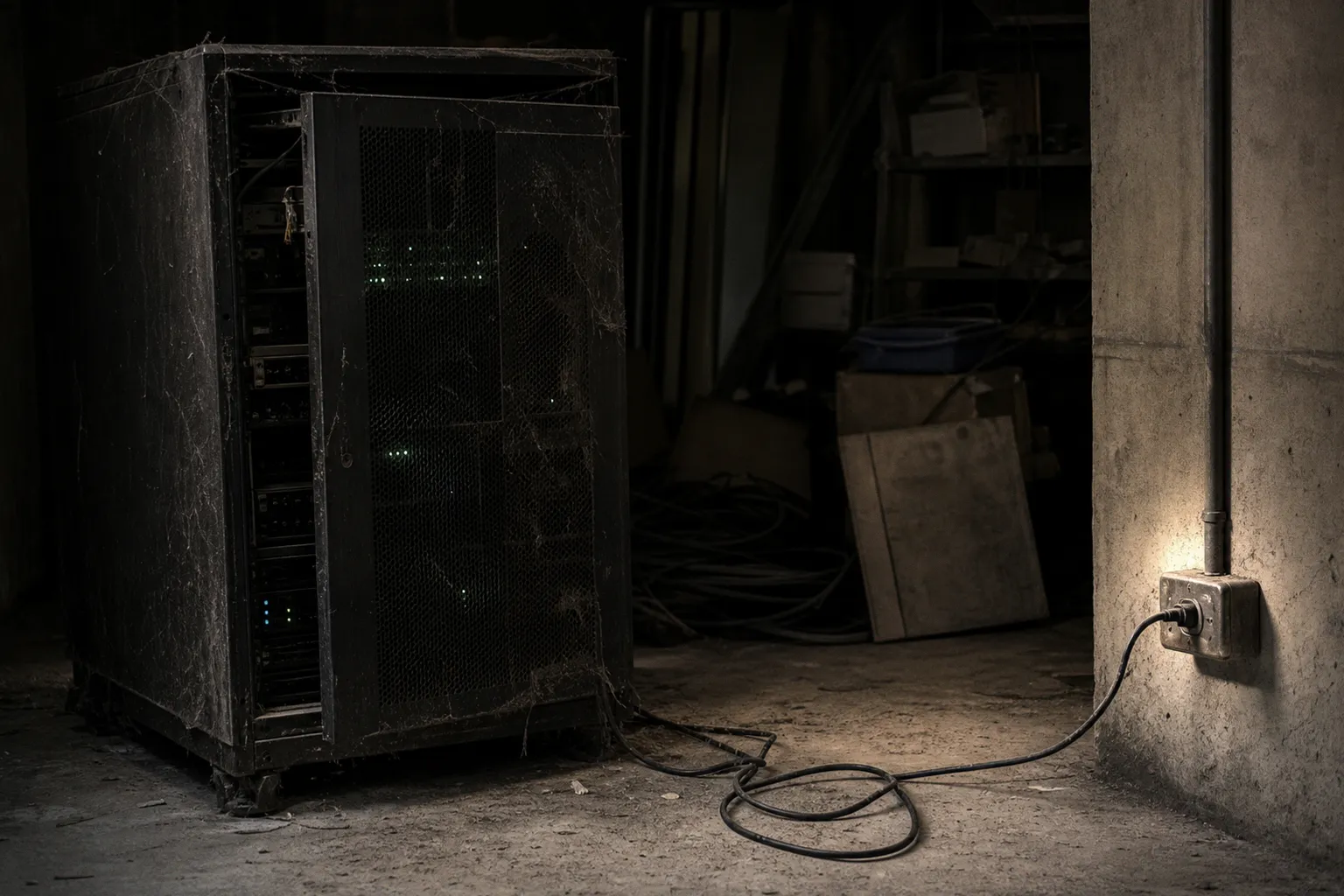
That zero-yield state is common in DePIN and node-based income because the system is not judging effort. It is judging usable supply: verified storage, reliable bandwidth, low-latency compute, properly staked capacity, and uptime inside the protocol’s tolerance band. If your setup misses one gate, the reward engine does not care that your CPU is pinned at 90% or that your VPS bill cleared on time.
The VPS trap: cheap hardware can manufacture zero yield
The classic zero-yield setup starts with a $5 VPS and a generous interpretation of “minimum requirements.” A 1 vCPU, 1 GB RAM instance may be fine for a lightweight monitoring bot or a basic testnet client. It is not a serious default for resource-intensive nodes, storage networks, or high-performance chains that need consistent sync, disk throughput, and memory headroom.
This is where many free crypto mining software errors are misdiagnosed. The operator sees logs, restarts the service, changes ports, rotates wallets, and blames the protocol. The actual problem is simpler: the node never reaches a reward-eligible state because it cannot sync, cannot hold state, or cannot serve work at the required performance level.
A DePIN node is not a decorative process. It is a supply-side asset. If the network needs useful infrastructure and your instance cannot provide it, rewards decay to zero regardless of how “installed” the software looks.
| Setup variable | Low-quality configuration | Reward-grade configuration |
|---|---|---|
| CPU allocation | Shared 1 vCPU, frequent steal time | Dedicated or high-quality shared cores with stable performance |
| RAM | 1 GB with swap constantly engaged | Enough memory to sync without swap thrashing |
| Disk | Cheap network disk, poor IOPS | SSD/NVMe with sufficient write endurance |
| Network | Unclear routing, noisy host node | Stable routing and enough throughput for the protocol’s workload |
| Monitoring | Manual dashboard checks | Automated alerts for downtime, sync lag, disk pressure, and process failure |
| Reward outcome | Sync failures, missed proofs, zero yield | Eligible supply with measurable reward capture |
The fix is not blindly buying more hardware. That is how a supposedly passive node turns into a negative-carry infrastructure trade. The fix is to map the protocol’s reward trigger to the bottleneck.
For storage networks, disk capacity alone is not enough. The node must prove useful storage, stay online, and often meet collateral or staking rules. For bandwidth-sharing networks, raw server bandwidth is not enough if the network wants residential IP quality. For performance-sensitive nodes, latency and sync state matter more than headline CPU size.
A practical diagnostic sequence looks like this:
1. Check whether the node is reward-eligible, not merely online. “Running” is a process state. “Eligible” is an economic state. If the protocol dashboard separates online status, sync status, proof status, collateral status, and reward status, treat reward status as the only line that matters.
2. Read resource pressure over time, not at one clean moment. CPU high-water marks, memory exhaustion, disk I/O wait, and network drops usually occur during sync, proof generation, or traffic bursts. A calm snapshot after a restart is not evidence.
3. Compare actual sync progress with expected sync progress. If the node repeatedly falls behind, restarts, or rebuilds indexes, you do not have a software error. You have a capacity mismatch.
4. Price the upgrade against expected token liquidity. A $30 monthly VPS upgrade may be rational if rewards are liquid and stable enough. It is irrational if the token has shallow liquidity depth, high emissions, and no reliable exit market.
The node is not paid for existing. It is paid for delivering infrastructure the network can verify.
This distinction matters because DePIN rewards are closer to utilization-driven cash flow than to old “set-and-forget” mining. In an underused network, even a technically valid node may earn less than expected. In a congested or high-demand network, weak infrastructure is filtered out quickly.
Residential vs. data center IPs: bandwidth rewards fail quietly
Bandwidth-sharing protocols introduced a new class of operator error in 2023 and expanded aggressively through 2024: using data center infrastructure for networks that want residential traffic.
This is one of the most expensive misunderstandings in “free” node mining because cheap VPS bandwidth looks attractive on paper. A data center server may offer high throughput, low cost, and easy deployment. But if the protocol’s demand side values residential IP addresses, your data center IP is inferior inventory. In some networks, it may be flagged, downranked, or assigned zero rewards.
Grass-style and Meson-style bandwidth sharing models generally depend on the quality and classification of network endpoints. A residential IP and a data center IP are not interchangeable assets. One resembles a real user connection; the other resembles hosted infrastructure. Buyers of bandwidth, scraping routes, content delivery paths, or decentralized network capacity may price them differently — or reject one category entirely.
If you are troubleshooting DePIN bandwidth sharing, do not start with CPU usage. Start with IP classification.
The common failure pattern is easy to recognize:
- The node connects successfully.
- The dashboard shows an account or device as active.
- Traffic volume is negligible or inconsistent.
- Rewards are delayed, tiny, or absent.
- Moving the same setup to a residential network changes performance materially.
That is not a mystery bug. That is market selection.
How to separate IP problems from software problems
First, check the protocol’s stated preference or restrictions around IP type. Some bandwidth-sharing systems explicitly discourage VPS usage. Others do not publish every blacklist rule, which makes the operator’s job less clean but not impossible. You do not need perfect knowledge of private classification systems to make a rational decision. You need to observe whether your endpoint behaves like valuable supply.
Second, compare endpoint classes under controlled conditions. Run one node from a residential connection and one from a VPS only if the protocol allows multiple devices and does not prohibit that configuration. Do not spoof location or rotate accounts to evade rules; that is not yield optimization, it is account-risk manufacturing.
Third, look at reward density per unit of bandwidth and uptime. A data center node with excellent uptime but no revenue is not “almost working.” It is the wrong asset for the order book.
| Symptom | Likely cause | Corrective action |
|---|---|---|
| Active status but no rewards | Data center IP rejected or downranked | Use an eligible residential connection if allowed |
| Frequent account reviews or flags | IP reputation problem | Stop cycling cheap VPS providers; verify endpoint quality |
| High bandwidth available, low task volume | Demand prefers different geography or IP class | Reassess network fit before adding capacity |
| Rewards fall after migration to VPS | Residential-to-data-center downgrade | Move back to approved endpoint type |
| CPU idle, bandwidth idle, node online | No demand routed to that endpoint | Track utilization rate, not just uptime |
This is also where the phrase “free crypto mining” becomes financially slippery. A residential node uses power, router capacity, and household bandwidth. A VPS node uses rental cost and may produce no eligible supply. Neither is free. The right comparison is net yield after infrastructure costs, not headline token emissions.
Collateral and staking: the hidden gate before payout
Storage and infrastructure networks often require collateral, staking, or locked tokens before the node can earn. Ignore that requirement and you can run a beautiful zero-yield machine indefinitely.
Filecoin-style storage economics make this obvious: the network does not just want someone to claim capacity. It wants enforceable commitments. Collateral aligns the storage provider with uptime and data integrity. Storj-like models also evaluate node reliability, reputation, and useful storage over time. The details vary by protocol, but the principle is stable: infrastructure rewards usually require economic skin in the game.
The most damaging version of this mistake is assuming collateral is optional because the software starts without it. Software readiness and payout readiness are separate states.
Before funding any setup, separate three balances:
1. Operating balance. Tokens or base-chain assets needed for transactions, gas, registrations, and routine actions.
2. Collateral or stake. Locked capital required to become reward-eligible or to support declared capacity.
3. Treasury reserve. Liquid capital held back for upgrades, downtime recovery, token price drawdowns, or collateral top-ups.
If you collapse these into one wallet and spend down the balance, the node may fail eligibility without any dramatic warning. Your dashboard may still look operational, while the reward engine has already moved you outside the paying set.
Collateral also changes the ROI profile. A node that appears profitable on hardware cost alone can become mediocre once locked capital is included. This is not an accounting footnote. It is the trade.
Suppose a storage node costs $25 per month to operate and requires $500 equivalent in locked tokens. If expected monthly rewards are $40, a casual operator sees $15 net monthly cash flow. A strategist sees $15 monthly operating surplus on $500 locked capital plus infrastructure risk, token volatility, and slashing or penalty exposure. That is a different yield curve.
If collateral is mandatory, zero stake means zero economic inventory. Uptime cannot compensate for missing capital.
This is also why token liquidity depth matters. A reward token with a high quoted APY but thin markets can mark well and exit badly. If emissions are paid in a volatile token, treat nominal yield as gross exposure, not income. Peg stability matters for stablecoin rewards; token market depth matters for everything else.
Maintaining 99% uptime without pretending it is passive
Many DePIN protocols tolerate less downtime than casual operators expect. A 95% uptime threshold sounds forgiving until you translate it. Over a 30-day month, 95% uptime allows roughly 36 hours of downtime. At 99%, the budget compresses to about 7.2 hours. At 99.5%, it is roughly 3.6 hours. That includes server crashes, provider outages, failed updates, disk-full events, residential router resets, and the operator forgetting to renew a VPS invoice.
Reward decay and slashing are not branding terms. They are mechanisms that protect the network from unreliable supply. If your node drops below the required availability band, the protocol may reduce rewards, reset reputation, slash collateral, or push your node down the allocation queue.
The operational fix is not obsessive manual checking. It is a small reliability stack.
- Process supervision. The node process should restart automatically after failure, but not in a blind loop that masks deeper errors. If it crashes ten times in an hour, you need an alert, not a comforting green icon.
- Disk monitoring. Storage nodes and chain clients fail ugly when disks fill. Reserve capacity and alert well before 100%.
- Sync lag alerts. A node can be online and economically useless if it is behind the network. Track lag where the protocol exposes it.
- Provider risk control. Cheap VPS providers can have noisy neighbors, network instability, and unpredictable maintenance. The low monthly bill is not cheap if it destroys uptime-weighted rewards.
- Upgrade discipline. Protocol updates should be applied quickly enough to avoid incompatibility, but not so recklessly that you become the first casualty of a bad release. Maintain notes and rollback paths.
- Power and router stability for residential nodes. For bandwidth-sharing, the weak link is often not the software. It is the ISP modem, router firmware, Wi-Fi instability, or household power.
For free node mining high CPU usage, the key question is whether high CPU is productive or pathological. During initial sync, high CPU may be normal. During steady state, sustained high CPU can indicate undersized hardware, indexing loops, inefficient configuration, or competing processes. If high CPU coincides with missed proofs, sync lag, or reward drops, it is not harmless background load. It is directly impairing revenue.
A clean operating model is to classify each node weekly:
| Node state | Technical condition | Portfolio action |
|---|---|---|
| Accumulating | Eligible, stable uptime, rewards above cost | Keep running; monitor token liquidity |
| Under observation | Online but low utilization or unstable rewards | Limit expansion; gather more data |
| Impaired | Sync lag, uptime below threshold, high resource pressure | Fix bottleneck or resize hardware |
| Economically dead | Zero rewards after eligibility checks | Shut down unless a near-term catalyst is concrete |
| Capital at risk | Slashing exposure, collateral stress, repeated outages | Reduce capacity or exit position |
This avoids the sunk-cost trap. Infrastructure operators often keep broken nodes alive because they already spent time setting them up. Markets do not refund effort.
Latency and sync: when slow mining is really bad routing
“How to fix slow crypto mining” is the wrong frame for many DePIN nodes. Slow has several meanings: slow sync, slow proof generation, slow task allocation, slow bandwidth routing, or slow reward settlement. Each has a different cause.
Latency-sensitive systems may require response times below roughly 50 milliseconds for high-performance participation. That does not apply universally across every DePIN project, but it is a useful warning: geography and routing can decide whether your node is competitive. A powerful server in the wrong region can lose to a modest server near demand.
Latency affects reward in three ways.
First, it can prevent the node from staying in sync. If network propagation is poor, the node falls behind, misses assignments, or wastes resources catching up.
Second, it can reduce allocation. Networks that route work to faster or more reliable nodes will naturally favor endpoints with better response times, especially when supply exceeds demand.
Third, it can increase apparent instability. Intermittent packet loss or routing congestion may look like application failure, while the real issue is the path between your node and the protocol’s peers or clients.
The corrective path is structured:
1. Identify where demand sits. If the protocol serves users in specific regions, a bargain VPS far away may be cheap for a reason. Match location to network demand, not just server price.
2. Measure latency to relevant peers or endpoints. Generic speed tests are weaker evidence than latency to actual network infrastructure.
3. Separate bandwidth from responsiveness. A 1 Gbps port with poor routing can underperform a lower-bandwidth connection with clean paths.
4. Watch sync lag after relocation. If moving regions improves sync consistency and reward capture, latency was part of the P&L.
5. Avoid overfitting to one good day. Routing quality changes. Evaluate over a full reward cycle where possible.
This is where utilization rate becomes a portfolio metric. High uptime with low utilization means the network is not buying much of what you are selling. High utilization with poor stability means you have demand but insufficient reliability. High utilization, high uptime, and liquid rewards are the only combination worth scaling.
A repair playbook for zero-yield DePIN nodes
When a node earns nothing, do not start by reinstalling everything. Reinstallation feels productive because it gives you fresh logs and a clean prompt. It rarely fixes the economics.
Use a staged repair process.
1. Confirm the node reached the payout layer
Look for explicit reward eligibility. Not “connected,” not “synced yesterday,” not “device registered.” You want the protocol’s equivalent of eligible, active, proven, bonded, or earning.
If the project has epochs, rounds, or settlement windows, verify you have passed a full window after becoming eligible. Some operators declare failure before the first payout cycle closes. Others wait weeks while missing an obvious staking requirement. Both errors are avoidable.
2. Verify the asset type the network actually wants
For bandwidth networks, check whether residential IP supply is required or preferred. For storage, check whether capacity must be vetted, collateralized, or reputation-aged. For compute, check hardware architecture, GPU requirements if any, and job allocation logic. For chain nodes, check sync status and version compatibility.
This is a market matching exercise. The network is not obligated to reward generic infrastructure.
3. Calculate full cost before scaling
Include:
- VPS or hardware lease cost.
- Electricity for home devices.
- Bandwidth opportunity cost or ISP constraints.
- Collateral or stake.
- Gas and transaction fees.
- Replacement parts and hardware depreciation.
- Time spent monitoring and recovering failures.
- Token sale slippage if rewards are illiquid.
If you omit locked capital and slippage, the APY will look cleaner than the trade deserves.
4. Fix the binding constraint only
If the node lacks collateral, do not upgrade CPU. If the IP class is wrong, do not add RAM. If sync fails due to disk I/O, do not switch regions first. The binding constraint is the one condition preventing reward eligibility or reward capture.
A disciplined operator changes one major variable at a time, then observes a full reward period. Random changes create noisy results and hide the actual fix.
5. Kill unfixable nodes quickly
A zero-yield setup with no clear path to eligibility is not a lottery ticket. It is negative carry. Shut it down, preserve capital, and redeploy only when the protocol’s requirements, demand, and token economics justify another attempt.
The ROI line: when “free” mining deserves capital
The final decision is not whether the node can run. It is whether the setup earns an acceptable risk-adjusted return after infrastructure cost, collateral, uptime risk, and token liquidity.
Use a simple hurdle rate. If a node costs $20 per month and requires no collateral, it needs to produce more than $20 in liquid, saleable rewards just to break even. If it also requires $300 in locked tokens, the monthly surplus must compensate for capital lockup and token drawdown risk. If rewards are illiquid or emissions-heavy, discount them. If uptime must stay above 99%, price your operational effort. If the IP requirement forces residential infrastructure, include the real cost of that endpoint.
A strict DePIN ROI calculation looks like this:
Net monthly yield = liquid reward value minus infrastructure cost minus expected maintenance cost minus slippage minus penalty risk reserve.
Then divide that by the capital actually tied up, including collateral and dedicated hardware. Not by the amount you wish you had invested. Not by zero because the software download was free.
Free crypto mining only becomes investable when the node supplies something the network demonstrably pays for: eligible storage, trusted bandwidth, low-latency service, or reliable validation. Everything else is dashboard theater. The operator’s edge is not clicking install before other people. It is identifying the reward gate, sizing infrastructure to the gate, and shutting down capital sinks before they become a habit.